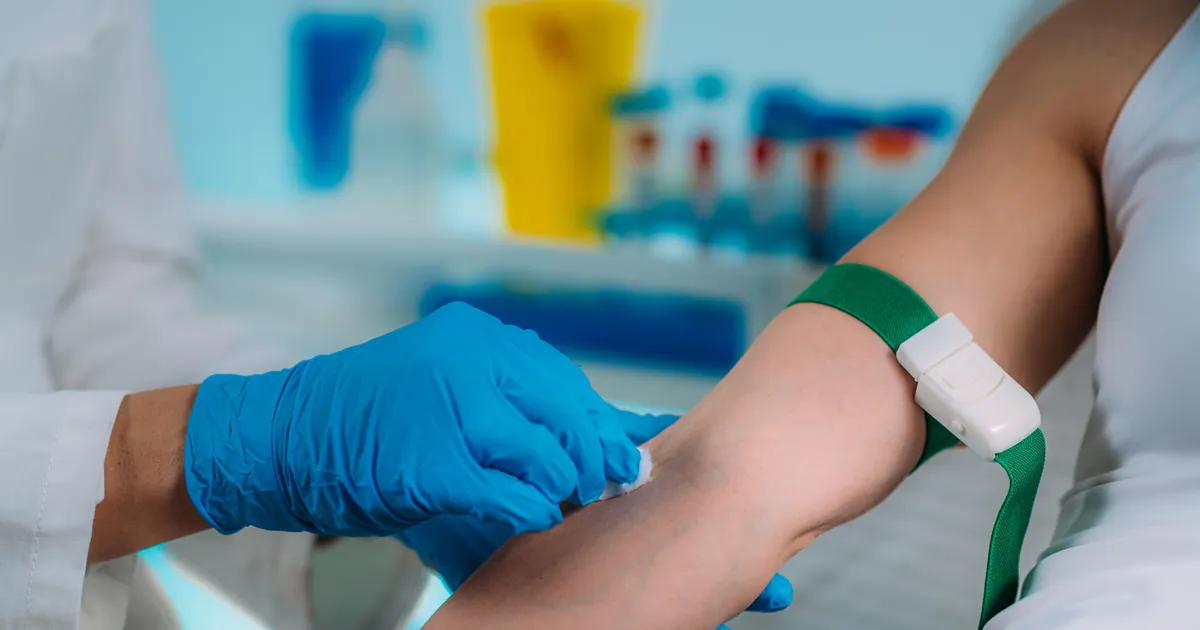
An externship is supervised practice drawing blood from real patients at a real clinical site, and it is the single most important thing to check before choosing a program. 45 of the 1,252 programs in our directory include one.
Everything else about a program — price, length, schedule — matters less than this.
What it actually is
After classroom work and practice on training arms and classmates, you go to a working site: a hospital lab, an outpatient draw station, a clinic or a donor centre. You draw from real patients under the supervision of experienced staff, and every draw is documented.
You keep going until you have completed the required number of successful venipunctures and skin punctures. Certification bodies require documented live draws, so this is not optional enrichment — it is a prerequisite for the credential.
Why it decides whether you get hired
Certification eligibility depends on it. Documented draws are a requirement, not a bonus.
Employers weigh it heavily. The difference between a candidate who has drawn from frightened patients under time pressure and one who has only practised on a rubber arm is enormous, and hiring managers know exactly how to ask about it.
It is where you actually learn. Training arms have obvious veins that never move, never roll, never collapse, and are attached to nobody who is anxious. Every genuinely difficult part of the job only exists on real people.
It is frequently how people get their first job. Sites hire externs they liked. Treat the externship as a weeks-long interview, because that is what it often is.
The question that separates good programs from bad
Do you place me in an externship, or do I have to find my own?
This is the question. Ask it before you pay anything.
Schools with established clinical relationships place students routinely. An individual cold-calling hospitals to ask for unpaid supervised practice is in a much harder position — sites take students from schools they have agreements with, because those agreements cover liability, insurance and supervision.
A program without placement is not automatically bad, but it has handed you the hardest logistical problem in the whole process. Know that going in.
What to ask before enrolling
- Is an externship included in tuition?
- Do you place me, or do I arrange it?
- How many draws will I complete? Compare against your target certification's requirement.
- Where are your clinical sites, and how far? A placement 50 miles away is a real cost.
- What are the scheduling expectations? Many sites need daytime weekday availability — a genuine problem if you chose an evening program around a job. Ask early.
- What happens if I do not hit the required draws in the scheduled window?
- What must I complete first? Background check, drug screen, immunisations, TB test, CPR — these take time and money and gate your start.
Question 5 catches more people than any other. Evening coursework does not imply an evening externship.
What to expect when you are there
You will be slow at first. Everyone is. The staff supervising you have all been the slow one.
You will miss. Everyone misses. What matters is how you handle it — stay calm, know your limit, and hand off rather than digging.
Most sites cap attempts. Commonly two, then fetch someone more experienced. This is patient care, not pride.
You will meet genuinely difficult draws — dehydrated patients, oncology patients drawn from repeatedly, elderly fragile veins, children. This is the real curriculum.
Professionalism is being assessed. Early, clean, prepared, polite. Externs get hired on this as much as technique.
Making it count
- Turn up early and ready. It is noticed immediately.
- Ask about hard sticks specifically. Ask experienced staff how they found a vein you could not.
- Learn the systems, not just the needle. Being fast and accurate in the lab information system makes you useful from day one.
- Be good with frightened patients. It is the most transferable skill you will build, and the one supervisors remember.
- Say you want a job. Ask about openings before your last day. Externs who ask get considered; externs who leave quietly get forgotten.
The bottom line
A program without an externship can cost more than a program that includes one, whatever the tuition says — because you may end up unable to complete certification, or spending weeks trying to arrange clinical hours nobody wants to give an individual.
Every school page in our directory shows whether an externship is included and, where published, the hours. Start with programs in your state.